Wedding Words
What to Write in a Wedding Card: Thoughtful Messages for Every Relationship
Original wedding card examples for friends, family, colleagues, and couples you do not know well, with a simple personalization method.
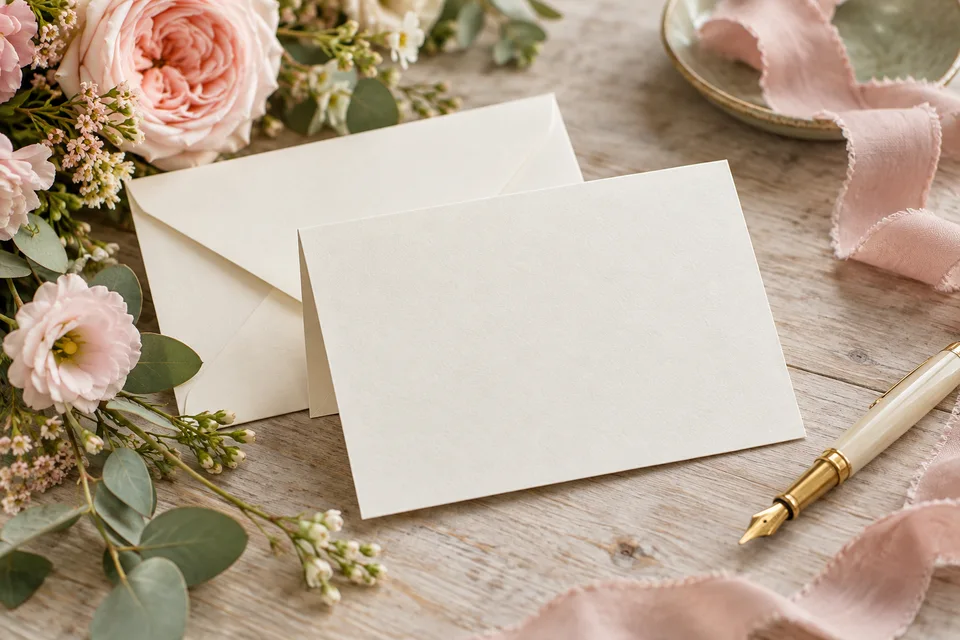
A thoughtful wedding card can be three sentences: congratulate the couple, add one true personal detail, and offer a warm wish for their future. Address both partners, even if you know one better. You do not need poetic language or advice about marriage to write something worth keeping.
The examples here are original starting points. Use the level of warmth that fits your actual relationship, change the details honestly, and sign in a way that makes clear who the message is from. A short sincere note is enough.
The three-part message builder
- Open with the occasion. “Congratulations to you both on your wedding day.”
- Name something real. “It has been lovely to see how much you enjoy building a home together.”
- Look ahead kindly. “Wishing you many ordinary days filled with that same warmth.”
Only use the middle sentence if it is true. If you have not spent much time with the couple, replace it with gratitude for being included. Specificity helps when it is genuine; invented intimacy can make a message feel less comfortable.
For a close friend
“Congratulations, Maya and Jordan. From our late-night kitchen chats to this beautiful day, it has been a joy to see your life grow. Wishing you a marriage full of easy laughter, honest conversations, and a home that feels like you both.”
This version includes a familiar memory without making the card only about the friendship. Keep the partner included in the closing wish. If the memory would need explanation or embarrass anyone reading the card later, choose a simpler detail.
For a more casual voice: “You two make a lovely team. So happy to celebrate with you today, and already looking forward to the dinners, stories, and small adventures ahead. All my love to you both.”
For a sibling or close family member
“Seeing you begin this chapter brings so much happiness. Alex, welcome to the family, and to you both: may your home be a place of kindness, good humor, and the freedom to be yourselves. We are cheering you on today and always.”
Use “welcome to the family” only if it fits the relationship. A partner who has belonged to the family for years may appreciate “We are so glad to celebrate the family you have already built.” Avoid suggesting that the wedding is the first moment their relationship becomes valid.
A quieter family message might read: “We love you both and are grateful to share this day. Wishing you patience for difficult days, delight in the ordinary ones, and many reasons to celebrate together.”
For a colleague or a couple you know less well
Keep the message warm and uncomplicated. You do not need to invent a personal anecdote. A professional relationship can still support a kind and memorable note.
“Warm congratulations on your wedding. Wishing you both a joyful celebration and a marriage filled with care, companionship, and good things to share. Thank you for including me in this happy occasion.”
If you are not attending, remove the final sentence or write, “Thinking of you both as you celebrate.” Do not imply that you attended an event you missed. Sign with your full name if the couple may not immediately recognize your handwriting or first name.
Short messages that still feel complete
- “So happy for you both. Wishing you a lifetime of showing up for each other.”
- “Congratulations on your marriage. May the home you build together feel warm, welcoming, and wonderfully yours.”
- “With love on your wedding day and every ordinary day that follows.”
- “Wishing you shared laughter, steady kindness, and many small adventures together.”
A short message is especially useful for a group card. Add a personal sign-off rather than squeezing several borrowed quotations into a narrow space. If several people are signing, leave room for everyone and avoid making your contribution the only long speech.
Formal, humorous, and religious tones
For a formal card, choose clear language rather than grand phrases: “Please accept our warmest congratulations on your marriage. We wish you lasting happiness and a wonderful celebration with those you love.” Formal does not have to mean distant.
Use humor only if you are confident both partners will enjoy it. A gentle line about always finding a new restaurant together can fit a food-loving couple. Jokes about divorce, obedience, sex, ex-partners, or one person being lucky to be tolerated can introduce an unpleasant note.
Religious wishes belong in the card when they reflect the couple's beliefs or a clearly shared understanding. If you are unsure, a wish for peace, love, and mutual care is a thoughtful alternative. Avoid treating your own beliefs as instructions for their marriage.
What to leave out
Skip questions about children, advice the couple did not request, and comparisons with other weddings. Do not mention the cost of your gift or explain a family disagreement in the card. The message should remain comfortable if both partners reread it years later.
Check names, titles, and any new surname directly instead of assuming a change. Addressing both partners by their first names is often straightforward. If the couple uses particular pronouns or relationship language, reflect their own wording.
Use inspiration without losing your voice
If you are stuck on tone, HeartfeltTexts' personal-message ideas can provide a broader starting point for expressing affection. Read for the feeling you want, then write a fresh note in your own words. Avoid copying a passage that sounds unlike you.
Try reading your message aloud. Replace any word you would never normally say. Add one detail only you could truthfully contribute, or keep the message simple if that feels more natural. A card does not need to compete with the ceremony vows.
A final check before sealing the envelope
Confirm both names, remove assumptions, and make the signature clear. If you include a gift, follow the couple's stated arrangements and avoid putting private payment details in the written greeting. Choose a legible pen and allow ink to dry.
Your message is a small expression of support, not a performance. Write something kind that you can mean fully. For spoken congratulations, see our wedding speech guide; for the wider occasion, explore meaningful ceremony ideas.
Published by Anna’s Weddings Editorial. Examples are illustrative; planning suggestions should be adapted to your location, venue, and circumstances. Read our editorial standards.